

Make your characters fight for no reason at all
In order to develop characters we need to make them play-fight with one another in a stakes-free environment where we can simply explore through tiffs that are totally irrelevant to the "plot"

This post is part of an ongoing exploration of Scenes in TTRPGs, scenic play, and skillfully adding drama and character to your sessions
Our games contain mechanics, procedures, and structures for advancing the “plot” of a game. We create problems, put our characters in front of interesting decisions, and see what happens.
Game rules hardly ever advance characters or relationships. To explore and advance character and relationship, we need to throw our characters into conflicts where players reveal their needs and desires, thwart one another, find ways to approach and appeal to one another, and discover whether or not differences are resolvable. All this happens alongside plot, and need their own proper time and space.
For many posts now, I’ve been simply calling these chunks of gameplay Dramatic Scenes. But it’s also useful, for this post, to call them what they are: Little made-up fights where we cause our characters to bicker and fight and yell and lie and kiss and argue for reasons totally unaddressed by the game rules.
For most TTRPGs, these conflicts look “meaningless” for the purpose of the plot, the adventure, the story, the quest. They don’t use anything on your character sheet, and they won’t tell you if you succeed or fail to pick a lock or slay the beast. Nothing in the game incentivizes you to make them up. If you wait for the game to tell you when to do this, a campaign can pass you by drama-free.
Most games do not have triggers for having dramatic moments. Chances are, if you want to explore more dramatic scenes, we need to insert scenes with made-up conflicts even when the game does not ask for them at any point.
Let’s take an example of a fight-for-no-reason:
Two halfling players, Elijah and Sean, are fleeing from an orc ambush that threatens to wipe the rest of their party. Elijah goes, “I’m gonna flee in a boat.” Sean agrees and asks if he can come, too. “Hell yeah,” Elijah says. “Sweet,” says Sam. They pass their Get-Out-of-Dodge roll, and the GM agrees that they get away. In most games, the consequences of fleeing are described and resolved.
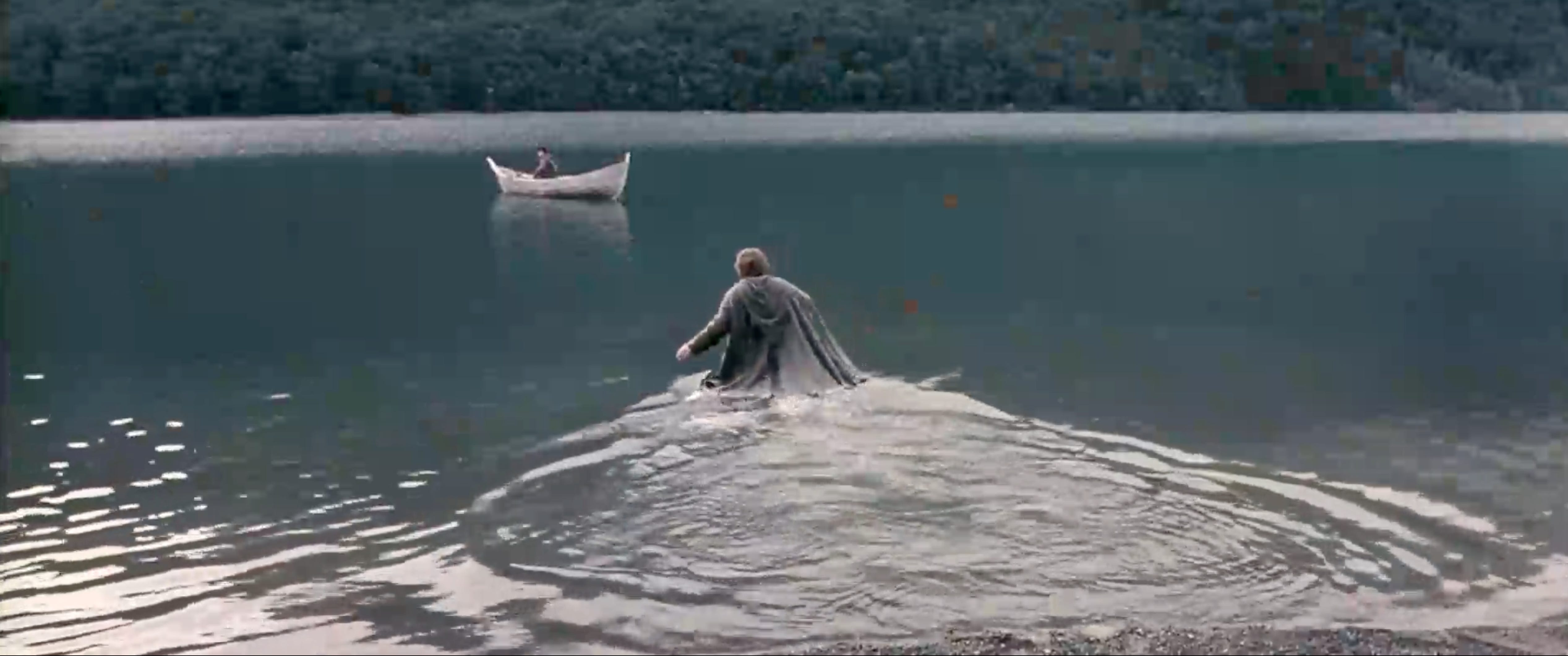
“But wait,” Elijah says, thinking that he’d like to have some kind of big emotional moment. “I think now would be a good time to have a scene.” Sean agrees, and they decide to invent a conflict.
Elijah decides that his character is going to get busy escaping, but leaves Sean’s character, Samwise, behind, for his own good (or something). Sean says, “No way, I’m going to scream something like ‘Don’t leave without me.’” Elijah decides that his character Frodo is resolute and wants to go it alone, so Sean changes tactics, and Samwise begins to just swim.
The GM throws in a complication: Samwise can’t swim, and starts to drown! This makes Sean nervous for his character for a moment, but Elijah goes, “Ok, ok, Frodo turns around and pulls him into the boat.” The table goes awwww, and the GM says, “Great, let’s close with some final words in this scene, with Samwise huffing and puffing in the boat.”
Sean thinks for a second. “Uh, Samwise goes… ‘I made a promise: ‘Don’t you leave him, Sam!’ And I don’t mean to.’” Elijah decides that Frodo has no words and just gives him a big, sopping wet hug, and they row away.
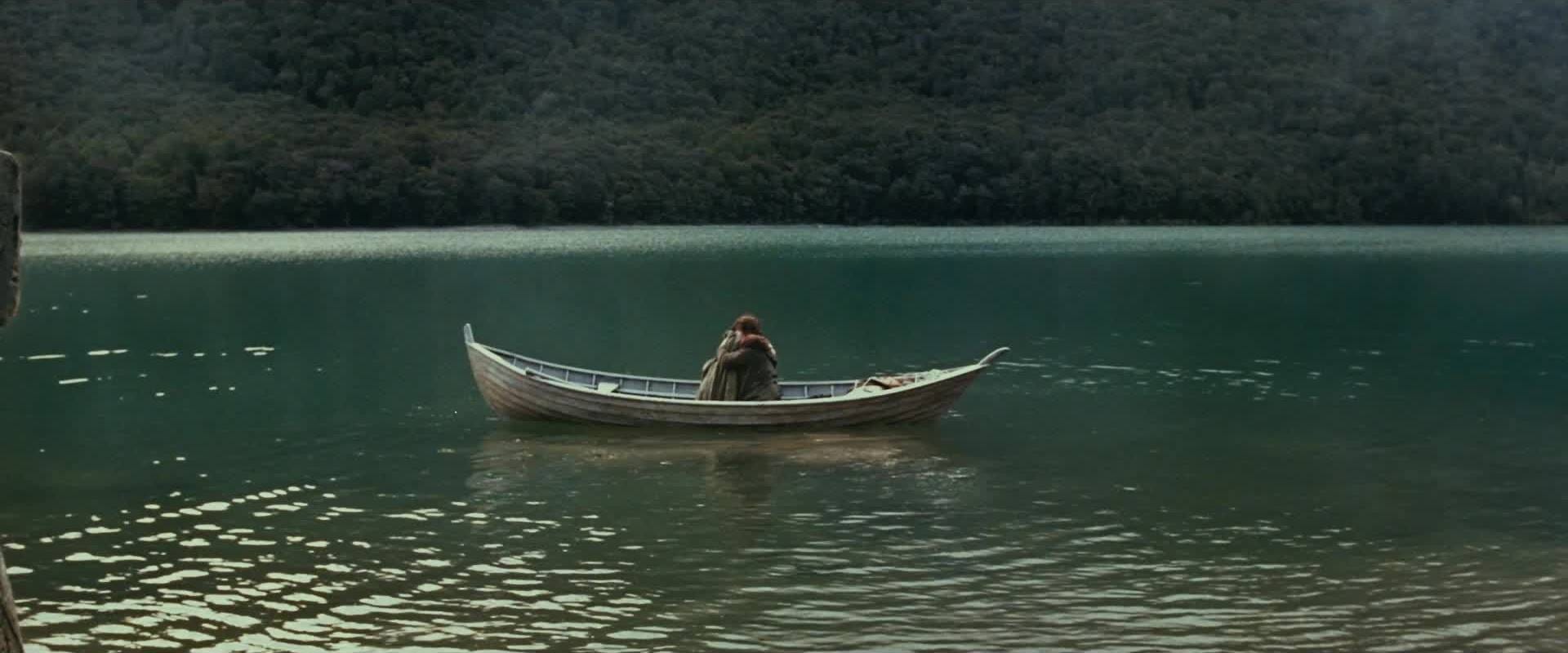
Look what happened: They haven’t done anything new to the plot, which developed the same way: Orcs attack, but halflings escape, splitting the party. Two players just decided, unprompted, that they wanted to play-fight for a moment in order to advance the relationship between their characters.
We also learned something important we might not have known before: These characters are bonded by a promise and great love, but this bond is also a source of tension, and something one player may try to escape from again. Will this be a source of conflict for them again? If only we knew!
Notice, the GM didn’t jump in to ask for Swim checks or try to hit Sean with CON saves for drowning. If players are play-fighting to find out what happens in relationships, players must feel like they can take big swings without messing up the game state.
Players are desirous to explore their characters. It is a great joy to start playing a sketch of a human being on a character sheet, and realize that between the lines, there is the promise of more to discover, more that could emerge. Have you ever gotten to the end of a campaign and sensed that you never really got to the bottom of who your character is? Or, commonly, have you ever looked up in the middle of the campaign and wondered who these characters are to one another?
The best way to discover the answer is to make up little opportunities for characters to fight, huff, puff, scrap, make up, don’t make up, kiss, scuffle, and reconcile.
When are you supposed to have these scenes, then?
It’s unsatisfactory to just say “any time at all,” though it’s fine to answer. So, since making up character conflicts will often happen outside of game procedures, try putting them precisely in places where game procedures often fail to have a properly atmospheric payoff. Trying putting two characters into a scene during…
Travel and otherwise uneventful overland exploration
Routine shopping trips in town
Setting up camp, or patching up wounds
Looting, gathering treasure, or during long periods of stealth or dungeon movement
Making preparations for big fights, or whenever characters are “getting ready” for a big in-game event
During crafting, or right before players set out on their adventure
Preparing or studying spells
Doing archival research, or poking around in libraries
And how do you create a conflict in a dramatic scene? Well, there’s a lot more written for the Scene Kit series, but a quick and dirty formula is:
One player comes up with something their character NEEDS from another character
The second player comes up with a reason, at least at first, for their character to DENY that need.
The needy character ESCALATES by doubling down, or perhaps changing their approach
The second character responds, maybe by relinquishing, rebuffing, ignoring, delaying, etc
The scene finishes dramatically, like with an emotional outburst or a reconciliation, or someone else finishes it for them by introducing a sudden danger or other interruption.
The saying goes: Play to find out. We play to discover “What will happen?” TTRPGs are traditionally written to enable this play. There is a less obvious game-within-the-game where we play to discover, “Who is my character, really?”
During a session, ask for five minutes when you think there might be an opportunity, and say, “Let’s play out a little conflict here.” It’s better if you make one up on the fly.
Other notes
Put out yet another video of TTPRG predictions for 2026, probably wayyyy too late for people to care, but I had all of the ideas written down. Besides, watch to the end, and you get to see a nice cat.
Recently, I’ve been playing Public Access, which has mechanical triggers that you pull and cause players to have to narrate a character’s backstory, or bond over childhood memories with another character in order to explore new rooms or clear conditions. It’s in these scenes that we learn most about our characters’ inner lives, even if they almost never directly lead to discovering new locations, fighting threats, or solving mysteries. Still, this often doesn’t lead to relationship-advancing scene-work.
Did you guys know it’s like, damn near impossible to find someone with PbtA chops to run you a one-shot of Urban Shadows 2e? Otherwise, I think I’m going to be running The Girls of the Genziana Hotel by Hendrik ten Napel soon, so I’m taking recommendations of your favorite Sarah Waters novel in advance.
Probably the next post in this series is going to be about of shaping character interactions and scenes around broad ideas like character “beliefs” or more high-level “questions” you’d like to answer while exploring a scene and… well, why I don’t believe in that sorta thing.
There are two game systems that specifically address this sort of gaming :
Drama System : https://pelgranepress.com/2011/09/29/introducing-dramasystem/
Protocol Games series : https://www.drivethrurpg.com/en/product/124469/gmzero-introduction-document-a-primer-for-gmless-play
I'm a big proponent of "play-fighting" as a mode of conversation with friends and thusly in ttrpgs but I often feel for certain folks it reads as "pvp". I'm never sure of how to break folks out of that perspective but I am in agreement though. In deepening or furthering relationships of all kinds you usually end up with these “meaningless” discordant dialogues and part of that is learning each others boundaries but it's also learning more about each other period. It's interesting to focus on the game of relationships at a table, part of what makes tabletop more intimate, than the goals that game itself provides I'm going to have to play with that.
Unrelated in anyway other than your post, I highly recommend *The Accidental Empress* for a Girls of Genziana Hotel game. More about royalty than your common workers but provides both what you need to fall in love with Bavarian and the Alps adjacent areas and the intrigue of the era.